The Park We Built Together
A dramatic inspirational story about trust, betrayal, courage, and a town that refused to lose its dream.
In the summer of 1968, our little town believed in something bigger than itself. We did not have much money, and most of us worked long days in factories, farms, diners, repair shops, and small offices. But we had one shared dream: a place where our children could run safely, where old friends could sit under trees, where families could gather on warm evenings, and where a community could remember that it still belonged to itself.
That dream became the new community park. It began as nothing more than an empty lot at the edge of town, full of weeds, broken boards, and forgotten stones. But to us, it was not empty. We saw grass before the grass was planted. We saw benches before the wood was cut. We heard children laughing before the first swing was built. We imagined Sunday picnics, summer baseball games, Fourth of July music, and quiet mornings when retired neighbors could walk slowly beneath the shade.
Everyone gave something. Some gave money. Some gave tools. Some brought food for the workers. Some gave only a few hours after work, but those hours mattered. The widows brought lemonade. The teenagers carried lumber. The fathers dug holes for fence posts. The mothers organized bake sales. The church choir held a concert. The schoolchildren collected coins in jars. It was not a rich man’s project. It was not a city official’s trophy. It was our collective dream.
I was one of the oldest men involved, though I did not feel old then. My hands were rough, my back often ached, and my knees complained when I knelt in the dirt, but my heart felt young every morning I walked onto that lot. I had lived in that town all my life. I had watched it survive hard winters, factory layoffs, floods, and grief. I knew what people could do when they stood together.
For months, we worked. We cleared the land. We planted young trees. We painted signs. We measured walking paths. Every nail, every shovel of soil, every plank of wood carried a story. When I looked at that park taking shape, I felt something I had not felt in years: pride without selfishness. It was not pride in myself alone. It was pride in us.
Then came Mr. Henderson.
He was polished, confident, and always smiling. He wore expensive suits and spoke in a calm voice that made people feel foolish for doubting him. He called himself a city developer, a man who understood paperwork, planning boards, permits, deeds, and all the confusing language ordinary people rarely had time to study. He told us he wanted to help.
“You folks have done something beautiful,” he said one evening, standing near the half-built pavilion. “But now you need someone who knows how to finalize it properly with the city council.”
Many people believed him. I wanted to believe him too. After all, we were tired. We had built the dream, but the legal papers still needed to be completed. The land had to be officially protected. The deeds had to be transferred correctly. The park had to become permanent.
So I handed him the documents.
That moment would haunt me for many years. I remember the feel of the folder in my hands. I remember the sunlight on his office window. I remember his smile when he took it from me. I remember thinking, “This is the final step. After this, our town will have its park forever.”
But trust, when given to the wrong person, can become a weapon.
A few days later, I went to his office to ask about the planning commission meeting. His secretary was away from her desk. The door to his office was partly open. I did not mean to spy. I only stepped close enough to knock. That was when I saw the map.
It was spread across his desk, marked in red pencil. At first, I thought it was the park plan. Then my eyes moved over the drawing and my stomach tightened. The walking paths were gone. The playground was gone. The pavilion was gone. In their place were parking spaces, storefronts, delivery lanes, and a large block labeled commercial shopping center.
My hands went cold.
When Henderson noticed me, he quickly folded the map. His smile appeared again, smooth and practiced.
“It’s only a technical drawing,” he said. “Nothing to worry about.”
I asked him why a shopping mall was drawn over our park.
He laughed softly, as if I were an old man confused by modern business. “It’s to ensure the city owns it, I promise. These things look strange before they’re finalized.”
I wanted to believe him. Sometimes the hardest truth to accept is the one standing right in front of your face. I had trusted him. The town had trusted me. If he was lying, then I had placed our dream into the hands of a thief.
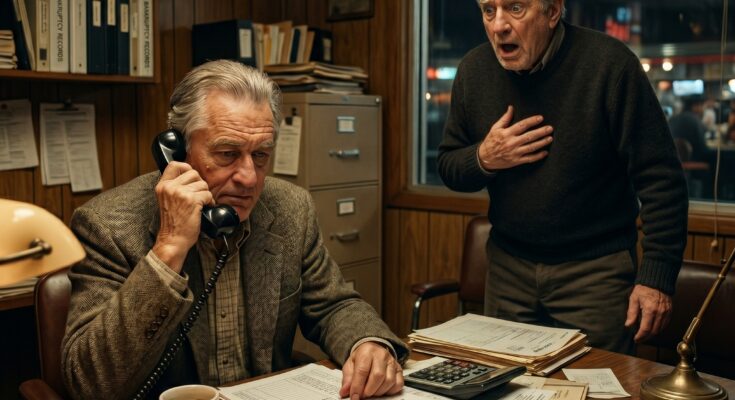
Later that evening, I returned to the building because I had left my hat in the hallway. His office door was closed, but his voice carried through the thin wall. He was speaking on the phone.
“The park was a good cover,” he said. “I got the deeds from that simple old man. We’re breaking ground next week.”
For a moment, I could not breathe.
Those words struck deeper than insult. He had not only betrayed me. He had betrayed every person who had donated a dollar, every child who had painted a stone, every widow who had baked pies, every worker who had come after a twelve-hour shift to build something good.
He had looked at our hope and seen only profit.
I walked home slowly that night. The streetlights flickered. The town was quiet. In windows, I saw families eating dinner, children doing homework, fathers reading newspapers, mothers folding laundry. None of them knew yet. None of them knew that the park we had built together was about to be stolen.
I felt ashamed. I felt foolish. I was angry, yes, but under the anger was something heavier: guilt. I had been trusted with the papers. I had believed the wrong man. I kept hearing his words: that simple old man.
By the time I reached my porch, I had made a decision. Henderson thought age made me weak. He thought kindness made our town easy to cheat. He thought ordinary people would surrender because the paperwork looked official and the language sounded complicated.
He was wrong.
The next morning, I visited Mrs. Whitaker, a retired schoolteacher with sharper eyes than any lawyer I had ever known. She read every copy of every document I still had. Then we went to see Samuel Price, a veteran who had worked as a county clerk before his retirement. He knew how records were filed, where copies were kept, and which signatures mattered.
By noon, we had discovered the first crack in Henderson’s plan. The transfer was not complete. He had the deeds, but the town still had rights through several signed community agreements. He had counted on us not knowing that.
That afternoon, we gathered people at the church basement. I stood before them with my hat in my hands. I told them everything. I told them I had trusted Henderson. I told them I had seen the mall map. I told them what I had heard on the phone.
At first, the room was silent.
Then anger rose like a storm.
But it was not wild anger. It became something stronger: determination. People began speaking all at once. Someone said we needed witnesses. Someone else said we needed the newspapers. A young mother said we should bring every child who helped build the park to the city council meeting. A pastor said truth should not whisper when lies were shouting.
For the next three days, our town moved like one body. We copied documents. We collected receipts. We found photographs of the workdays. We gathered donation records, volunteer lists, bake sale notes, and letters from families. The schoolchildren made signs. The teenagers called local reporters. The factory workers came straight from their shifts in dusty boots. The widows brought coffee and sandwiches for everyone staying late.
Henderson had money, lawyers, and connections.
We had something he never understood: the truth shared by many hearts.
The city council meeting took place on a Thursday evening. Henderson arrived in a dark suit with two men beside him. He looked confident until he saw the room. Every seat was filled. People stood along the walls. Children held drawings of the park. Mothers held photographs. Old men held shovels they had used to plant the first trees.
When Henderson presented his proposal, he used beautiful language. He spoke of progress, jobs, tax revenue, modern development, and economic opportunity. He said the shopping center would “bring life” to the town.
Then Mrs. Whitaker stood.
Her voice was small at first, but the room quieted for her.
“This town already brought life to that land,” she said. “We brought it with our hands.”
Samuel Price presented the records. The pastor presented the donation ledger. The schoolchildren showed their drawings. The local newspaper reporter took notes as fast as his pen could move.
Then I stood.
My hands shook, but my voice did not.
“I made a mistake,” I said. “I trusted a man who saw our community as something to use. But this park does not belong to him. It does not belong to greed. It belongs to every person who believed our town deserved beauty.”
I looked at Henderson.
“You called me a simple old man,” I said. “Maybe I am simple. I believe a promise should mean something. I believe land built by a community should stay with that community. I believe children deserve grass more than another parking lot. And I believe no man is powerful enough to steal what an entire town is willing to protect.”
The room erupted.
The council delayed the vote. Then they opened an investigation. Henderson’s partners withdrew. The newspaper published the story the next morning with the headline: Town Fights Back Against Park Land Deal.
Within weeks, Henderson’s plan collapsed. The deed transfer was reversed. The land was placed under official public protection. The park would remain a park.
The dedication ceremony happened later that summer, not as a quiet formality, but as a victory. The whole town came. There was music, food, laughter, and tears. A brass plaque was placed near the entrance. It did not carry one rich donor’s name. It carried a sentence:
“This park was built by the hands and hearts of the people.”
I stood beneath the young trees and watched children run across the grass. Some were barefoot. Some were laughing so hard they could hardly breathe. Their parents sat on blankets. Their grandparents sat on benches. The air smelled of fresh paint, cut grass, and summer rain.
For the first time in days, I forgave myself.
I learned that trust can be broken, but trust can also be rebuilt. I learned that shame loses power when spoken honestly. I learned that age is not weakness, kindness is not stupidity, and ordinary people are not powerless when they stand together.
Years passed. The trees grew tall. Children who played there became parents. Parents became grandparents. The town changed, as towns always do. Stores opened and closed. Roads widened. New people moved in. Some old houses disappeared. But the park stayed.
Every time I walked through it, I remembered the danger of silence. I remembered how close we came to losing everything because one man believed profit mattered more than people. But I also remembered the night the town filled that council room, shoulder to shoulder, refusing to be fooled.
That is the part of the story I want people to remember.
Not the betrayal.
Not the lie.
Not the man who tried to steal it.
Remember the people who protected it.
Because every community has something worth defending. It may be a park, a school, a family home, a small business, a neighborhood tradition, or a promise made long ago. There will always be people who look at what others love and ask, “How can I profit from this?” But there will also be people who stand up and answer, “You cannot take what we built together.”
The world often praises the loud, the rich, and the powerful. But history is also shaped by quiet people who show up after work, bring food to tired neighbors, sign petitions, tell the truth, and refuse to give away their community’s future.
That park taught me that hope is not soft. Hope can be stubborn. Hope can carry a shovel. Hope can read legal papers late into the night. Hope can fill a city council room. Hope can look corruption in the face and say, no.
And sometimes, hope wins.
So if you are older and someone makes you feel useless, remember this: wisdom is not loud, but it is powerful. If you made a mistake, remember this: honesty can become the first step toward repair. If your community is facing betrayal, remember this: one person may expose the lie, but many people can defeat it.
The park still stands. The benches are worn now. The trees are wide. The grass has carried generations of footsteps. Children still run where a shopping mall was once planned. Families still gather where greed once tried to plant concrete.
And on quiet evenings, when the sun lowers behind the trees, I like to imagine every hand that helped build it still there in some way. The hands that baked bread, carried wood, signed petitions, planted flowers, painted fences, and held each other steady.
That is what a community is.
Not buildings. Not paperwork. Not promises from powerful men.
A community is people choosing each other again and again, especially when it would be easier to stay silent.
And that is why the park survived.
Moral of the Story
Never underestimate the power of ordinary people united by truth. A dream built together should never be surrendered to greed. Even when trust is broken, courage can protect what matters. Sometimes one honest voice is enough to wake an entire town.