A Baby Monkey’s Life Among the Ancient Temples of Angkor Wat
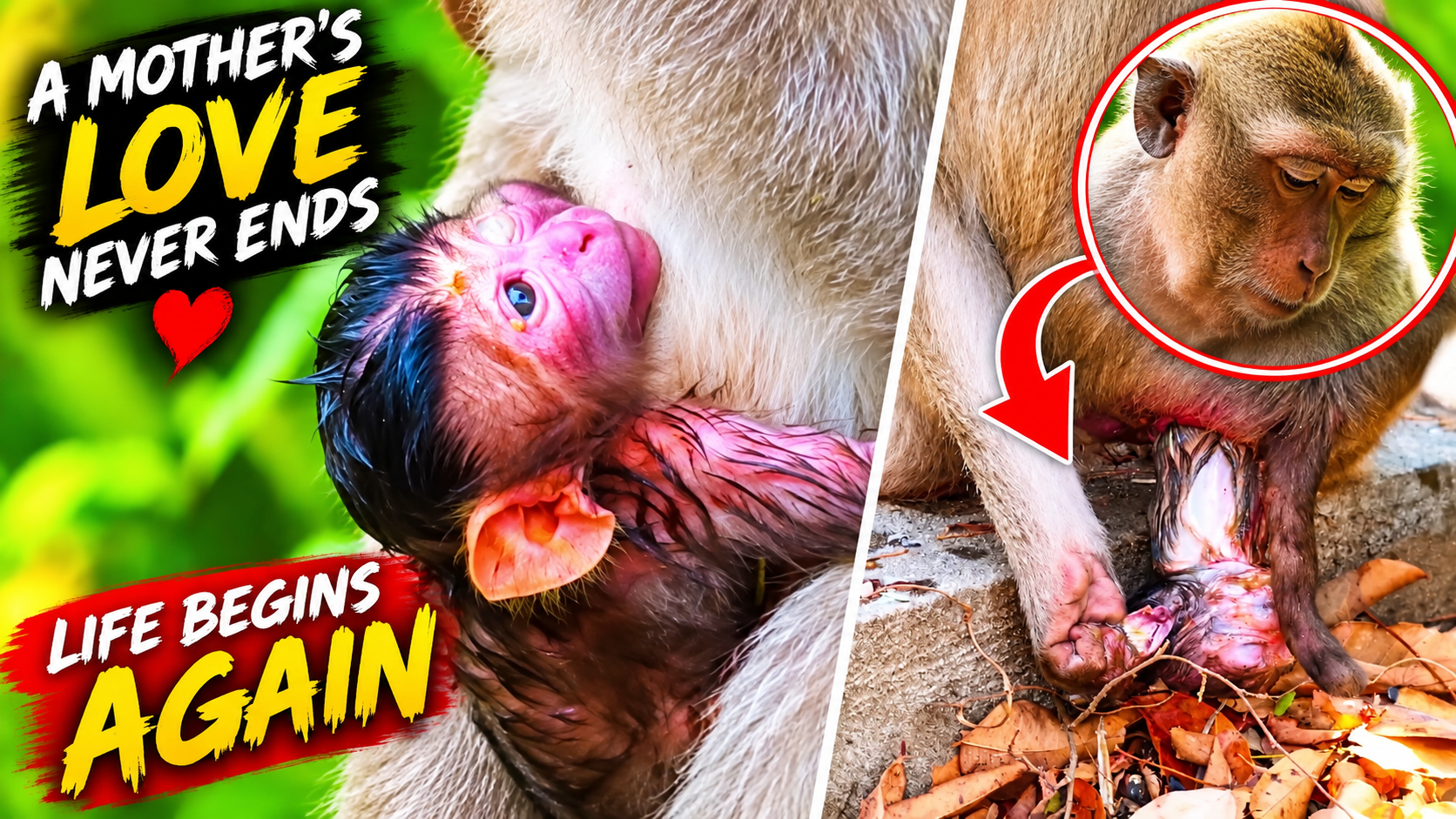
Deep inside Cambodia’s ancient Angkor landscape, where enormous trees rise beside centuries-old stone temples, wildlife continues its daily life much as it does beyond the paths traveled by visitors.
Among the most noticeable animals in parts of the Angkor area are macaques. They move between trees, forest edges, pathways, and ancient stone structures while living complex social lives within their groups.
One of the most touching sights is a mother moving through this historic landscape with her young baby close beside her.
There is no performance and no need for an exaggerated story. It is simply a glimpse of a young monkey learning about the world while remaining close to the animal it depends on most—its mother.
A Morning Among the Ancient Stones
Early morning brings a special atmosphere to Angkor Wat.
Before the heat of the Cambodian day becomes strong, soft light passes through the trees surrounding the temple complex. Birds call from the forest, insects can be heard among the vegetation, and monkeys begin moving through their surroundings.
For the macaques, the ancient structures are simply part of the landscape in which they live.
A stone ledge can become a place to sit and observe. A tree beside an ancient wall can provide shade or a route through the canopy. Forest vegetation offers places to explore and search for naturally available food.
A young monkey experiences this environment very differently from an adult.
Everything is still new.
Every branch presents another climbing lesson. Every unfamiliar sound attracts attention. Every step away from mother provides another small experience.
Staying Close to Mother
During the earliest part of a young macaque’s life, its mother plays an essential role.
The infant may spend considerable time staying physically close to her as she moves through the environment.
When she walks, the baby follows or holds close.
When she stops, the youngster has an opportunity to observe.
When other monkeys approach, the infant can watch their behavior while remaining near its mother.
This relationship provides the youngster with an important foundation as it begins interacting with the larger social group and surrounding habitat.
For a visitor watching quietly from a respectful distance, the connection can be fascinating to observe.
There may be no dramatic action at all.
Sometimes the most meaningful moment is simply seeing a tiny monkey look away from its mother, investigate something nearby, and then return to her.
## Learning One Step at a Time
Growing up in the wild requires practice.
Young monkeys are not born with the experience of adults. Coordination and confidence develop as they move, climb, observe, interact, and explore.
A youngster may begin with very small adventures.
It can reach toward a leaf.
Touch the ground.
Investigate a root.
Follow another young monkey.
Attempt to climb onto a low branch.
Some movements may initially appear uncertain compared with the effortless climbing of an experienced adult.
But every attempt provides experience.
The youngster gradually learns where to place its hands and feet, how to maintain balance, and how to move through increasingly complicated surroundings.
This is not a single dramatic milestone.
It is a gradual process repeated throughout the youngster’s development.
## The Forest Is Their Classroom
There are no formal lessons in the forest.
Young monkeys learn by living.
They observe adults searching for food. They watch other youngsters climb and play. They experience rain, heat, unfamiliar sounds, social interactions, and changing surroundings.
Even play has value.
Young macaques chasing and interacting with one another are not simply passing time. Such activity can provide opportunities to develop coordination and social skills.
An older juvenile may move confidently across a branch while a younger animal watches from nearby.
Later, the younger monkey may attempt a smaller version of the same movement.
It may succeed.
It may stop and choose another route.
Both outcomes provide experience.
## The Social World of Angkor’s Monkeys
A monkey troop is more than a collection of animals occupying the same location.
Macaques have complex social relationships.
Individuals communicate using body positions, facial expressions, sounds, movement, grooming, and proximity.
Grooming is particularly noticeable during quieter periods.
One monkey may sit while another carefully searches through its fur. Beyond its practical role, grooming can also contribute to maintaining social relationships.
Young monkeys grow up surrounded by these interactions.
Over time, they begin participating more actively in the social world of their group.
Mother is extremely important during early development, but she is not the youngster’s entire world forever.
As the infant grows, other monkeys become increasingly important too.
## When Curiosity Grows
A young monkey eventually begins moving farther away from its mother.
At first, the distance may be tiny.
The youngster takes several steps away.
Stops.
Looks around.
Perhaps it approaches another juvenile.
Then it returns.
Later it tries again.
Each successful exploration expands its understanding of the environment.
This balance between staying near mother and investigating the surroundings is one of the most interesting parts of watching young primates develop.
Independence does not arrive overnight.
It grows through thousands of ordinary experiences.
## WATCH THE VIDEO
[EMBED VIDEO HERE]
Watching wildlife on video gives us an opportunity to notice small behaviors that are easily missed during a brief encounter.
Instead of looking only for dramatic moments, watch how the youngster moves.
Notice how often it checks its surroundings.
Watch the distance between mother and baby.
Observe how other monkeys respond.
Small details often tell a more accurate wildlife story than dramatic interpretations.
## Living Beside Human Visitors
The Angkor archaeological landscape receives visitors from around the world, which means some monkeys regularly encounter people.
This creates an important responsibility for visitors.
A monkey that appears comfortable around humans is still a wild animal.
It should not be treated as a pet.
Visitors should avoid touching, chasing, surrounding, or intentionally provoking monkeys for photographs or videos.
Feeding wildlife can also cause problems.
When wild monkeys repeatedly receive food from people, they may begin associating visitors with an easy food source. This can change their behavior and increase unwanted encounters between monkeys and humans.
Watching from a respectful distance allows natural behavior to continue.
That is better for the animals—and usually provides a more authentic wildlife experience.
## An Ordinary Day Can Be a Beautiful Story
Wildlife stories do not always require danger.
There does not need to be a rescue.
There does not need to be a fight.
Sometimes nothing extraordinary happens.
A mother wakes with her baby.
The troop searches for food.
Young monkeys play.
Adults groom.
The animals rest during the warmer part of the day.
Later, the youngster explores again.
For wildlife, an ordinary peaceful day can be a successful day.
That reality deserves to be appreciated.
## Afternoon Around the Temple
As the afternoon progresses, the appearance of Angkor changes.
Sunlight moves across the stone structures while shadows lengthen beneath the trees.
A young monkey that explored energetically earlier may return to its mother to rest.
Later, it becomes active again.
Perhaps it climbs slightly higher than before.
Perhaps it follows another juvenile.
Perhaps it discovers that one branch is too difficult and chooses an easier route.
These small decisions gradually create experience.
What appears difficult today may become routine as the youngster grows stronger and more coordinated.
## Ancient Stone and Living Wildlife
There is something remarkable about seeing wildlife beside Angkor’s ancient architecture.
The temples represent centuries of Cambodian history and human creativity.
The monkeys represent something completely different: a living ecosystem continuing around those ancient structures.
It would be tempting to call the monkeys “guardians” of Angkor, but that would give them a human role they do not actually have.
They are simply wild animals living within and around a remarkable cultural landscape.
That reality is powerful enough.
A monkey does not understand the historical significance of the stone beneath its hands.
It does not know how far visitors traveled to see Angkor Wat.
Its concerns are immediate:
Food.
Safety.
Mother.
Other monkeys.
Trees.
Rest.
The next place to climb.
## When Rain Comes
Rain can quickly transform Angkor.
The ancient stone darkens.
Leaves shine with water.
Small pools form.
The smell of wet vegetation and earth becomes stronger.
For the monkeys, rain is simply another part of life in a tropical environment.
They may move toward more sheltered areas or adjust their activity according to the conditions.
A young monkey continues learning through these changes.
Dry branches and wet branches feel different.
Stone surfaces change after rain.
Sounds change.
The forest itself seems different.
Every season brings new experiences.
## Growing More Independent
As a young macaque develops, its relationship with its mother gradually changes.
The youngster becomes stronger.
Its movements become more controlled.
It can spend more time exploring independently.
Interactions with other young monkeys become increasingly important.
Eventually, the infant that once stayed almost constantly beside its mother can move confidently through much more of its environment.
This does not happen because of one extraordinary moment.
Development is built from repetition.
One step.
One climb.
One social interaction.
One day after another.
## A Mother’s Presence
People naturally interpret mother-and-baby animal relationships through human emotions.
It is better to remain careful about claiming exactly what a wild animal is feeling.
We cannot simply look at a monkey and know that she feels “proud” or that her baby feels emotions exactly as a human child would.
What we can observe is already meaningful.
The youngster stays close to its mother.
The mother carries, nurses, protects, or maintains contact with her infant according to its needs and stage of development.
The baby gradually explores farther away.
It returns.
It follows when the group moves.
These observable behaviors provide a genuine story without needing invented dialogue or exaggerated emotion.
## Why Respectful Wildlife Watching Matters
Anyone fortunate enough to encounter monkeys around Angkor can help protect the experience.
Give the animals space.
Do not attempt to touch them.
Do not encourage them to approach for photographs.
Keep personal food secured.
Dispose of trash responsibly.
Never separate a mother from her infant.
Follow instructions provided by local authorities and site staff.
Wildlife does not need human interaction to make an encounter memorable.
Sometimes standing quietly and observing from a distance reveals far more.
## Evening Comes to Angkor
Eventually the heat begins to fade.
The light becomes warmer.
Long shadows stretch across the ancient stones.
Visitors gradually move away from different parts of the temple complex.
The monkeys continue their own routines.
A youngster follows its mother toward the trees.
Earlier in life, every movement away from her may have seemed significant.
Now the distance can gradually become greater.
The baby climbs.
Stops.
Looks around.
Moves again.
Mother remains nearby.
The youngster continues.
This small distance between mother and baby represents something happening throughout nature every day.
A dependent youngster is learning to become independent.
## Their Story Continues After We Leave
A visitor eventually puts away the camera.
The video ends.
People leave the temple.
But the monkeys’ lives continue.
They do not disappear when nobody is photographing them.
They continue searching for food, interacting with their group, resting, responding to their environment, and raising their young.
The next morning, the forest awakens again.
Birds begin calling.
Light reaches the ancient towers.
Leaves move above the stone walls.
And somewhere among the trees, another young monkey begins another day of learning.
It follows its mother.
It watches older monkeys.
It practices climbing.
It explores.
It returns.
Then it tries again.
There is no need to turn this into an extraordinary adventure.
The real story is already enough.
It is the story of a young wild animal growing up in one of Cambodia’s most extraordinary landscapes—learning about the world one ordinary, important experience at a time.
—
## Image Placement
[INSERT IMAGE HERE]
**Image Alt Text:**
Young macaque staying near its mother among the forest and ancient stone structures of the Angkor archaeological landscape in Cambodia.
## Suggested Facebook Caption
A young monkey’s world begins close to its mother. 🐒🌿 Among the ancient temples and forests of Angkor, young macaques gradually learn to walk, climb, explore, and interact with their group. These quiet moments offer a beautiful look at wildlife growing up beside one of Cambodia’s most historic landscapes.
## SEO Information
**SEO Title:** Baby Monkey Growing Up Among the Ancient Temples of Angkor Wat
**Meta Description:** Discover the quiet life of a young macaque growing up near Angkor Wat in Cambodia, learning to climb, explore, and become more independent while staying close to its mother.
**URL Slug:** `baby-monkey-life-angkor-wat-cambodia`
**Focus Keywords:** Angkor Wat monkeys, baby monkey Angkor Wat, Cambodia wildlife, macaque monkey Cambodia, monkeys at Angkor, baby macaque, Angkor wildlife
## TL;DR
Macaques live throughout parts of Cambodia’s Angkor landscape, where their daily lives unfold beside ancient temples, forests, and human visitors. Young monkeys begin life heavily dependent on their mothers before gradually learning to climb, explore, interact with their troop, and become more independent. Responsible visitors can help protect these wild animals by observing from a respectful distance and avoiding feeding or touching them.